This post may contain affiliate links. Please see our disclosure policy.
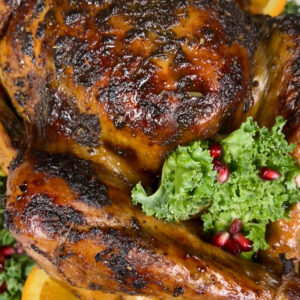
Bring Jamaican flavor to the holiday table with my Herb-Jerk Turkey made with Jamaican jerk marinade, Caribbean green seasoning, fresh herbs, garlic, and plenty of seasoned butter. A 24-hour dry brine helps season the turkey before it’s coated inside and out with herb-jerk butter and roasted over vegetables, Red Stripe beer, and chicken broth. The result is a beautifully browned turkey with plenty of flavor in every bite.
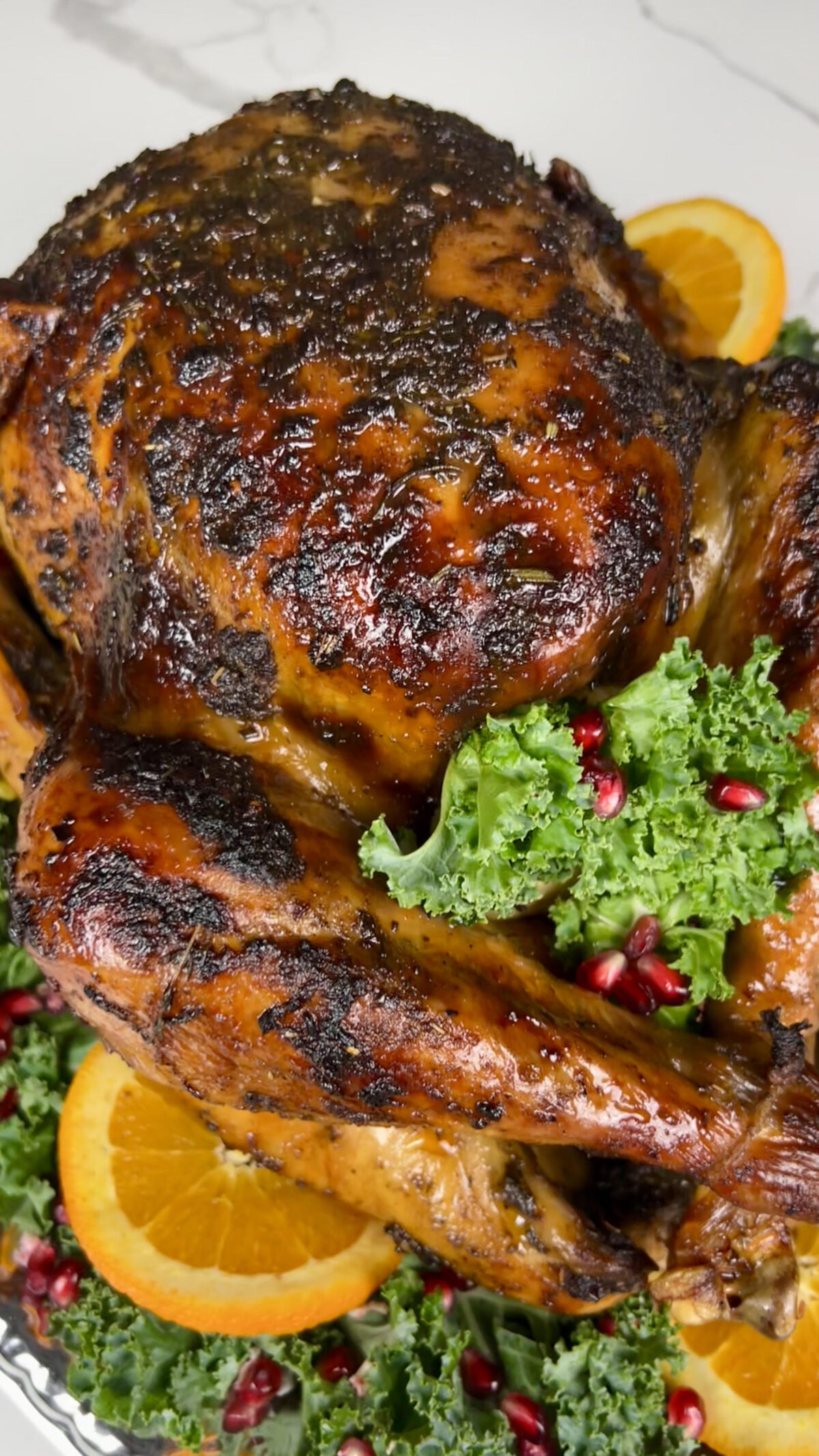
As a Jamaican, jerk marinade and green seasoning are two ingredients I reach for often, so naturally they found their way into my holiday turkey. But I didn’t want the jerk to overpower everything else. Fresh sage, rosemary, thyme, garlic, and poultry seasoning bring in those familiar holiday flavors, while the Jamaican seasonings give the turkey a little something extra. It’s my way of bringing both traditions to the same table.
I’ve made this Herb-Jerk Turkey a few different ways over the years, including roasting it whole as I do in this recipe and using the same flavor profile on a spatchcock turkey. Spatchcocking, which involves removing the backbone and flattening the turkey before roasting, gives you another option if you want more of the skin exposed and a different, quicker roasting method. Whichever way I prepare it, that combination of fresh herbs, jerk, and butter is what makes this turkey mine.
Why You’ll Love this Herb-Jerk Turkey Recipe
- Jamaican flavor meets a holiday classic: Jerk marinade and green seasoning give a traditional roasted turkey a Jamaican-inspired spin without taking away from the fresh herbs and savory flavors you expect from holiday turkey.
- The turkey is seasoned in layers: It starts with an overnight dry brine, followed by seasoned herb-jerk butter that goes over and under the skin and inside the cavity.
- The roasting pan does some heavy lifting: Celery, carrots, onion, garlic, orange, herbs, chicken broth, and Red Stripe create an aromatic base beneath the turkey as it roasts.
- It’s made for the holidays: If turkey is part of your Thanksgiving or Christmas spread and you want to switch things up from the usual preparation, this one brings a little Jamaican flair to the table.
What is Herb-Jerk Turkey?
My Herb-Jerk Turkey combines the flavors of a classic herb-roasted turkey with Jamaican jerk seasoning and Caribbean green seasoning.
Jerk seasoning is traditionally built around ingredients such as Scotch bonnet pepper, allspice, thyme, scallion, and other aromatics and spices. Green seasoning is another staple I use regularly in my Jamaican cooking, made by blending fresh herbs and aromatics into a flavorful marinade.
For this turkey, I combine both with butter, fresh sage, rosemary, thyme, garlic, poultry seasoning, and a few dry spices. Instead of making this a super-spicy jerk turkey, the jerk complements the herbs and other seasonings. You still know it’s there, but all of the flavors get a chance to shine.
Herb-Jerk Turkey Ingredients
For the Turkey
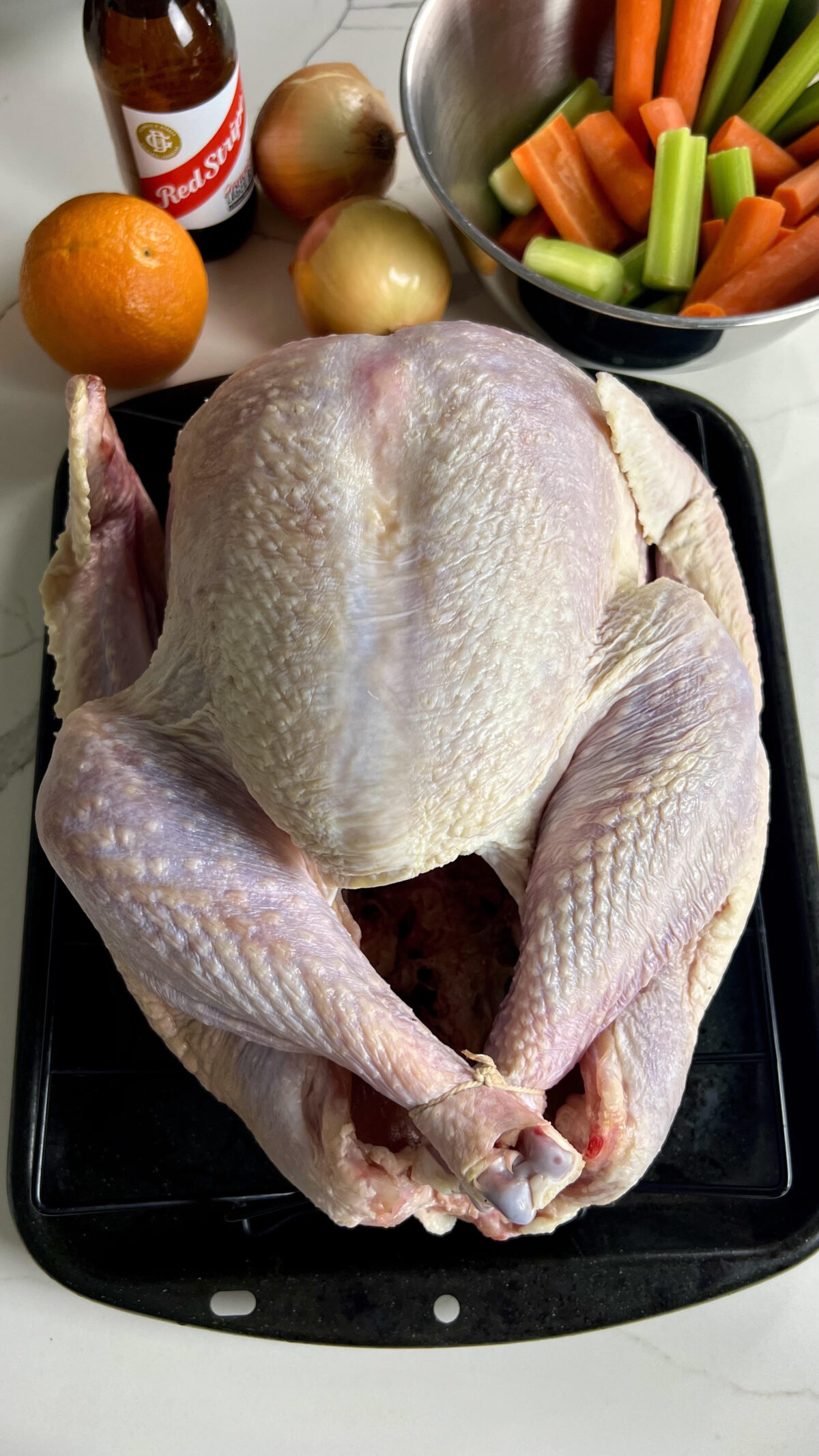
- Whole turkey: This recipe is written for a turkey weighing approximately 15 pounds. If yours is significantly larger or smaller, adjust the cooking time accordingly and rely on its internal temperature to determine when it is done.
- Kosher salt: The turkey gets dry-brined with kosher salt and refrigerated uncovered for 24 hours. This gives the salt time to season the meat before roasting.
- Unsalted butter: Two sticks of softened butter form the base of the seasoned butter. Using unsalted butter gives you more control over the salt since the turkey has already been dry-brined.
- Fresh sage, rosemary, and thyme: These give the turkey those savory, herby flavors I love in a holiday roast.
- Garlic: Fresh minced garlic goes directly into the seasoned butter, while whole cloves are added to the turkey cavity.
- Caribbean green seasoning: Green seasoning brings fresh herbs and aromatics into the butter. You can use my homemade Caribbean Green Seasoning recipe.
- Jamaican jerk marinade/wet jerk seasoning: Use your favorite store-bought jerk seasoning or homemade jerk marinade. This brings moisture, spice, and that unmistakable jerk flavor.
- Dry Jamaican jerk seasoning: Using both wet and dry jerk seasonings adds another layer of flavor without relying on the wet seasoning alone.
- Poultry seasoning: This keeps some of those familiar savory turkey flavors in the mix alongside the Jamaican seasonings.
- Garlic powder, onion powder, and paprika: These round out the seasoned butter and add more savory flavor and color.
For the roasting pan and turkey cavity
- Celery, carrots, onions, and more garlic: Some go inside the turkey while the rest create an aromatic vegetable bed in the roasting pan.
- Scotch bonnet peppers: I leave these whole and place them inside the turkey. Keeping them intact allows them to add their distinct flavor without releasing all of their heat.
- Orange: Orange goes both inside the turkey and into the roasting pan, adding a subtle citrus note to all those savory flavors.
- Chicken broth: This adds moisture to the bottom of the roasting pan and creates flavorful pan juices for basting.
- Red Stripe beer: A bottle of Jamaican Red Stripe goes into the roasting pan with the broth and vegetables. Consider it another little Jamaican touch.
How to Make Herb-Jerk Turkey
Dry Brine the Turkey
The preparation starts the day before roasting.
Remove the giblets and any turkey parts from inside the cavity and reserve them for stock or gravy, if desired. Clean the turkey as you normally would, then pat it very dry with clean paper towels.
Sprinkle the kosher salt evenly over the front and back of the turkey and inside the cavity. Place the turkey in the refrigerator uncovered for 24 hours.
Leaving it uncovered also gives the exterior time to dry, which helps when it’s time to roast.
Make the Herb-Jerk Butter
The next day, remove the turkey from the refrigerator and allow it to come closer to room temperature. Pat it dry again if needed.
Mash the softened butter in a bowl until smooth and spreadable. Mix in the fresh sage, rosemary, thyme, minced garlic, green seasoning, jerk marinade, dry jerk seasoning, poultry seasoning, garlic powder, onion powder, and paprika.
Make sure everything is thoroughly incorporated so you get a little bit of everything wherever that butter goes.
Season the Turkey
Preheat the oven to 375°F.
Now get that butter everywhere!
Rub the herb-jerk butter generously over the entire turkey, including the front and back. Carefully loosen the skin and work some of the butter underneath it so the seasoning is directly against the meat. Rub some inside the cavity as well.
Stuff the cavity with whole celery stalks, carrots, garlic cloves, Scotch bonnet peppers, a whole onion, quartered orange, and additional fresh herbs.
Roast and Baste
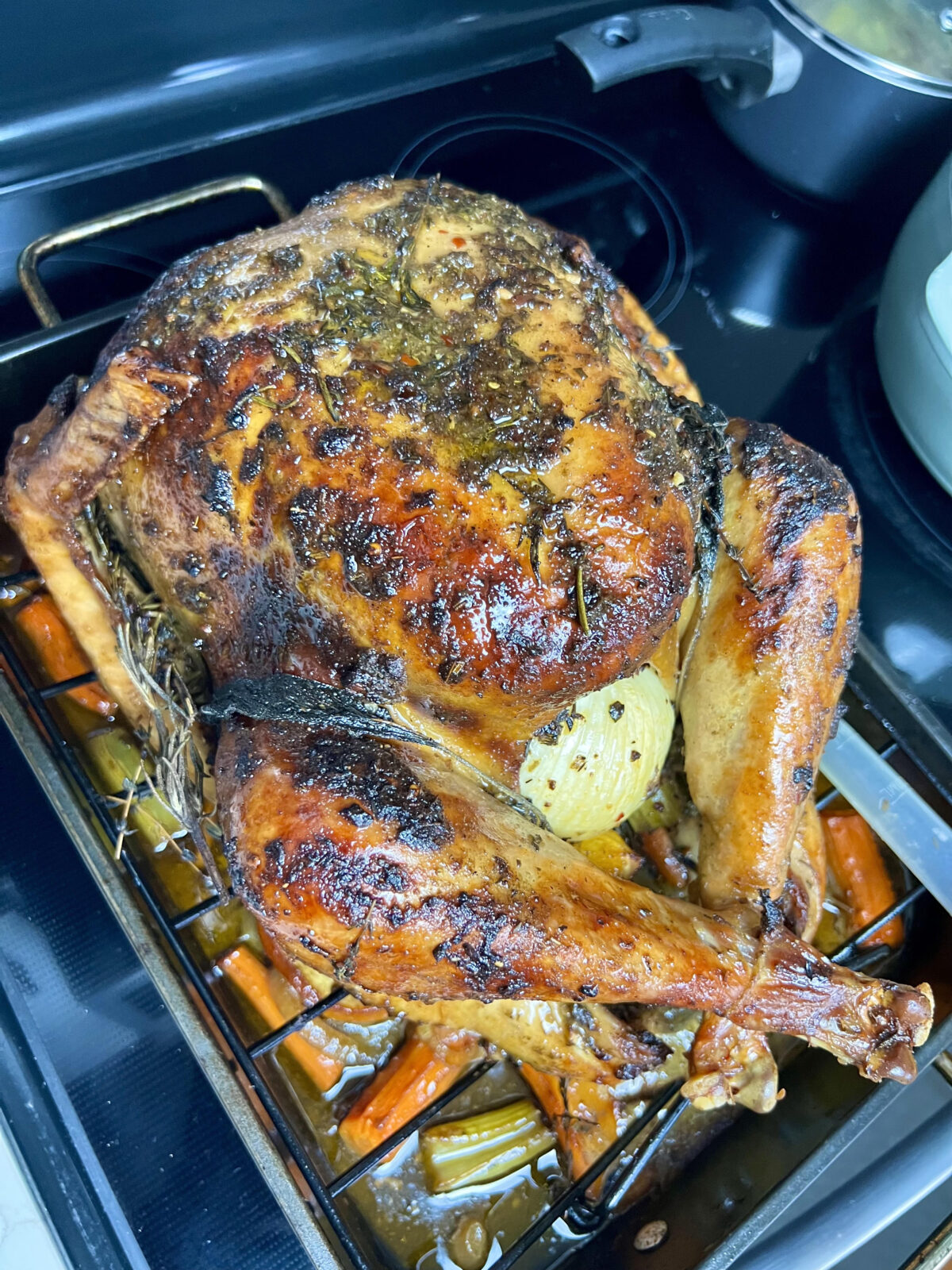
Loosely tent the entire turkey with aluminum foil, making sure the foil isn’t pressed tightly against the skin.
Roast for approximately 3½ hours, or about 12 to 15 minutes per pound.
After the first hour, begin basting the turkey with the flavorful liquid from the bottom of the roasting pan every 30 minutes. Alternate between roasting the turkey covered and uncovered each hour. This helps protect it from drying out while still giving the skin time to develop a rich, golden-brown color.
Check the temperature and rest
Cooking time is a guide, but temperature is what matters most.
Check the turkey using an instant-read meat thermometer inserted into the thickest part of the breast without touching bone. Remove the turkey around 160°F, just before it reaches a safe internal temperature of 165°F while it rests.
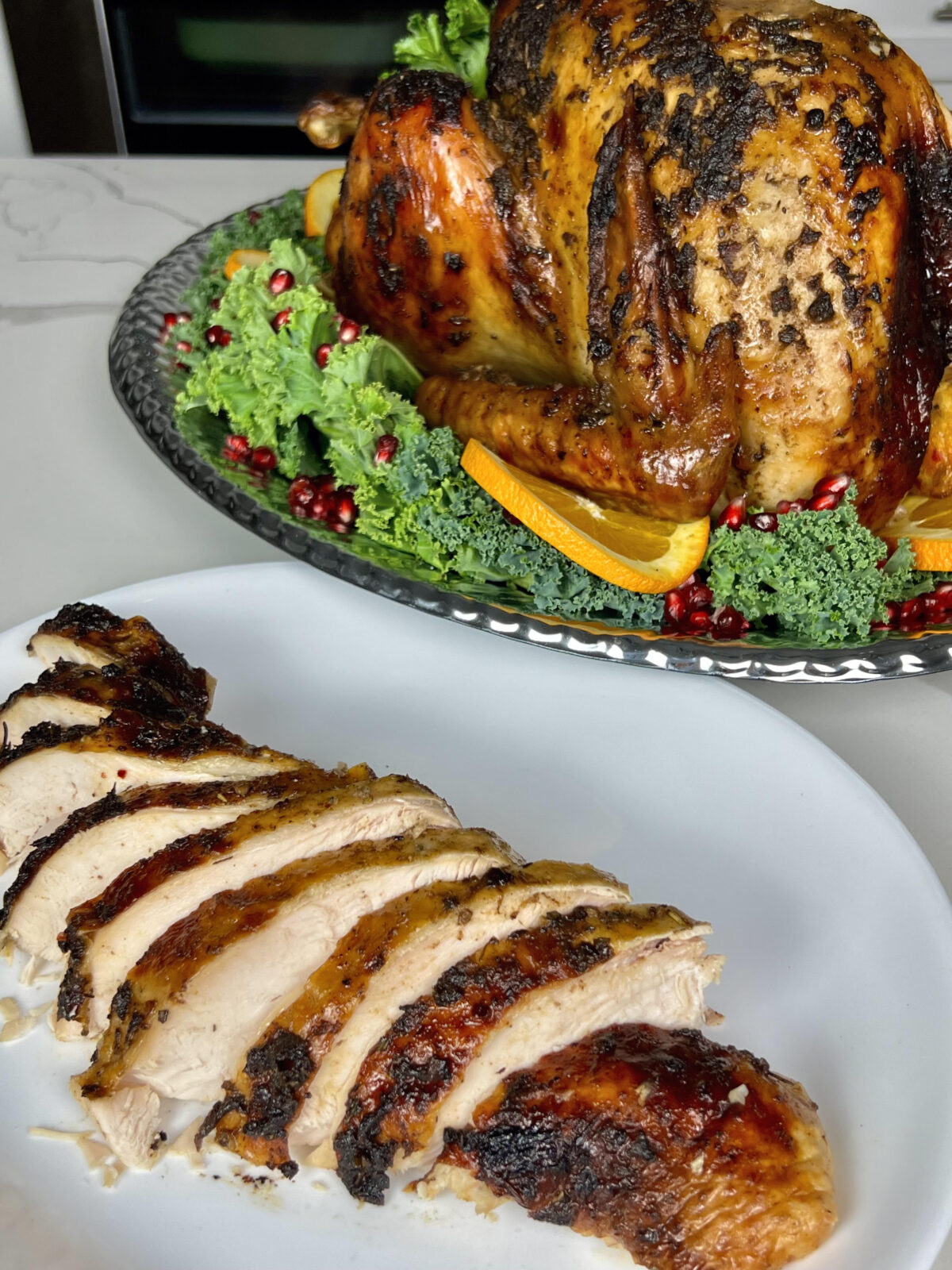
Allow the turkey to rest for 30 to 60 minutes before carving. Don’t skip the rest! Giving the turkey some time before carving helps keep all those juices where you want them: inside the meat.
Tips for the Best Herb-Jerk Turkey
- Don’t skip the overnight dry brine. This gives the salt time to season the turkey before you add the herb-jerk butter the next day.
- Use softened, not melted, butter. You want the butter soft enough to spread easily over and underneath the turkey skin without running off.
- Get the butter underneath the skin. Seasoning only the outside leaves a whole layer between the flavor and the meat. Carefully loosening the skin lets you put some of that herb-jerk butter directly onto the breast.
- Keep the Scotch bonnets whole. Piercing or cutting them can release considerably more heat. Leaving them whole gives you their flavor without turning the turkey into a spice challenge.
- Baste with the pan juices. That mixture of turkey drippings, vegetables, herbs, chicken broth, orange, and Red Stripe is way too good to ignore.
- Watch the color as it roasts. Alternating between covered and uncovered roasting helps control browning. If your turkey is getting darker than you’d like, tent it with foil again.
- Use a meat thermometer. Turkey size, oven performance, roasting pans, and other factors can affect cooking time, so don’t rely on the clock alone.
frequently asked questions
It has some heat from the jerk seasoning, but this recipe isn’t intended to be overwhelmingly spicy. The jerk is balanced by butter, fresh herbs, poultry seasoning, garlic, and the other seasonings. The Scotch bonnet peppers are also left whole rather than cut open.
Dry brining gives the salt time to penetrate the turkey rather than simply seasoning the surface immediately before roasting. Refrigerating the turkey uncovered also helps dry the exterior before the butter is added and the turkey goes into the oven.
The Red Stripe joins the chicken broth, vegetables, citrus, herbs, and turkey drippings in the bottom of the roasting pan, creating a flavorful liquid for basting while adding another Jamaican touch to the recipe.
Use the roasting time as a guideline rather than an absolute. A smaller turkey may cook faster, while a larger one may need additional time. Start checking the internal temperature before you expect it to be finished so you don’t accidentally overcook it.
Yes! I’ve also made a spatchcock version of my Herb-Jerk Turkey using the same combination of jerk, green seasoning, butter, and fresh herbs.
Spatchcocking means removing the turkey’s backbone and flattening the bird before roasting. Because the turkey lies flatter, more of the skin is exposed directly to the heat and the cooking time will differ from the whole roasted turkey in this recipe. If you use the spatchcock method, don’t follow the 3½-hour cooking time listed here. Monitor the turkey’s internal temperature and cook until it reaches 165°F.
Yes. You can mix the seasoned butter ahead and refrigerate it in an airtight container. Bring it back to room temperature before using so it’s soft and spreadable.
What to Serve with Herb-Jerk Turkey
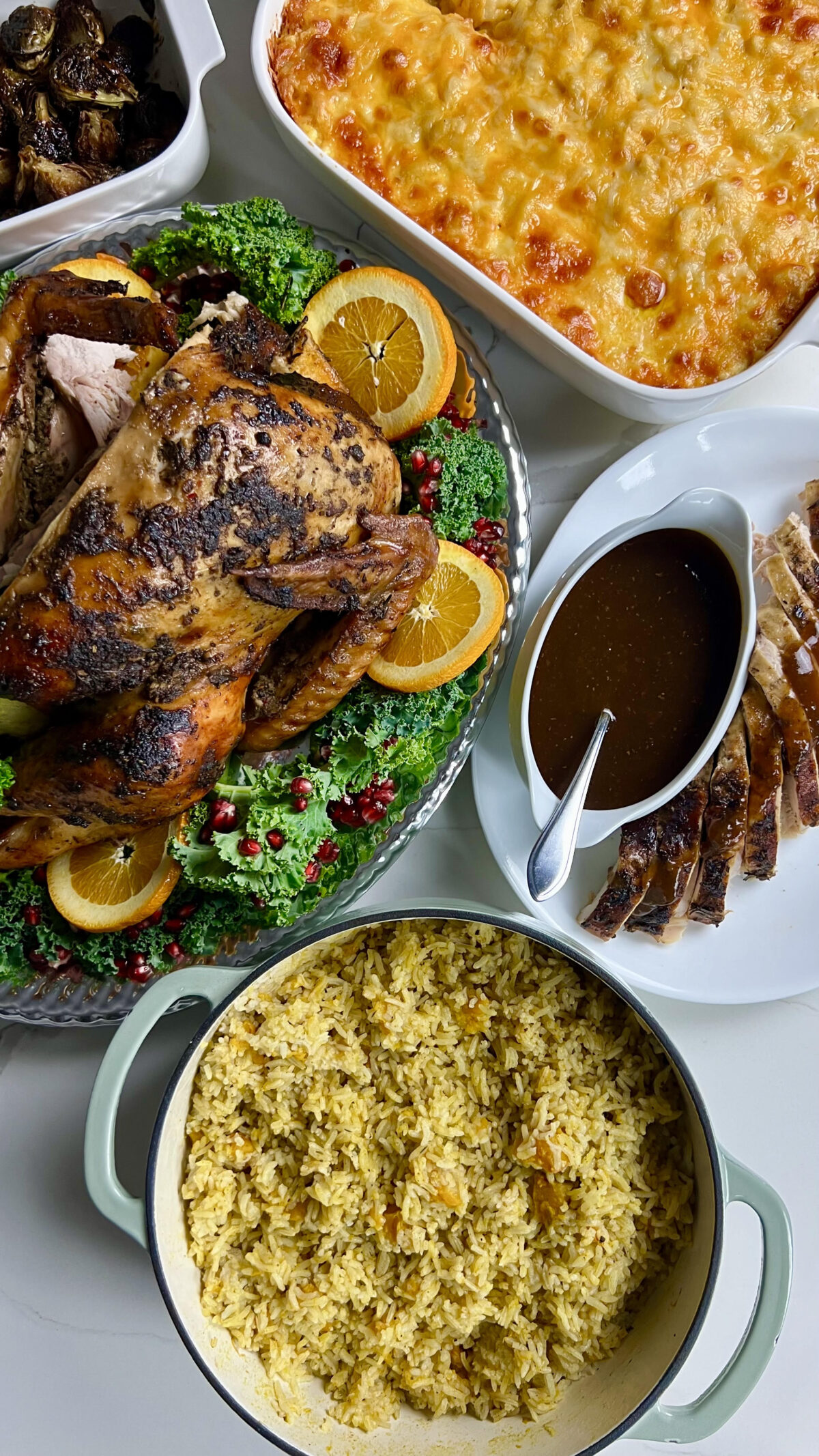
This turkey can be the centerpiece of a Jamaican-inspired holiday spread or served alongside a mix of Caribbean and traditional holiday sides.
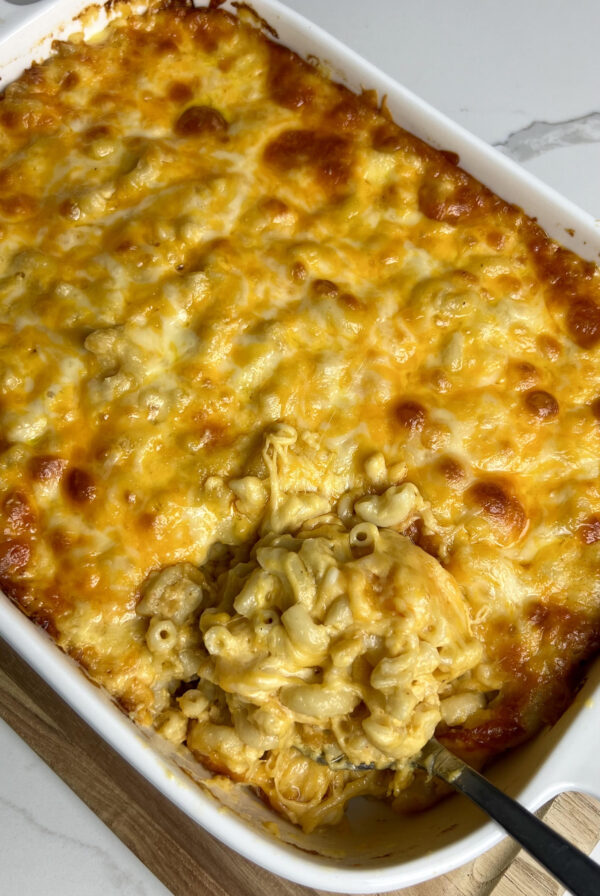
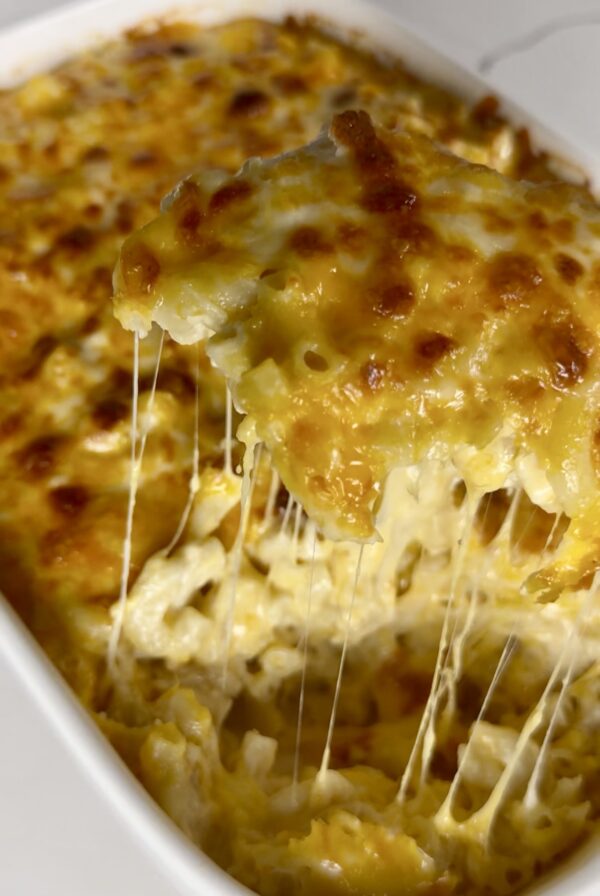
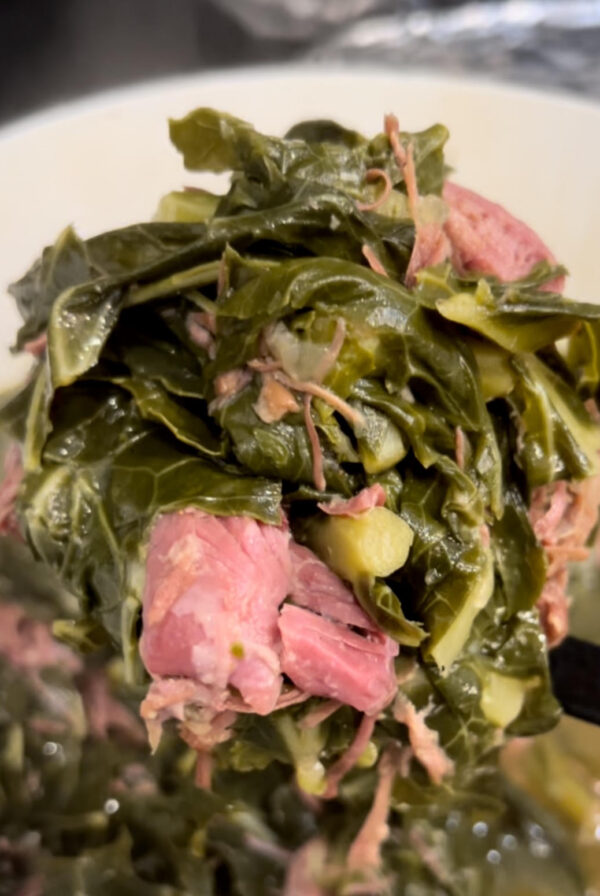
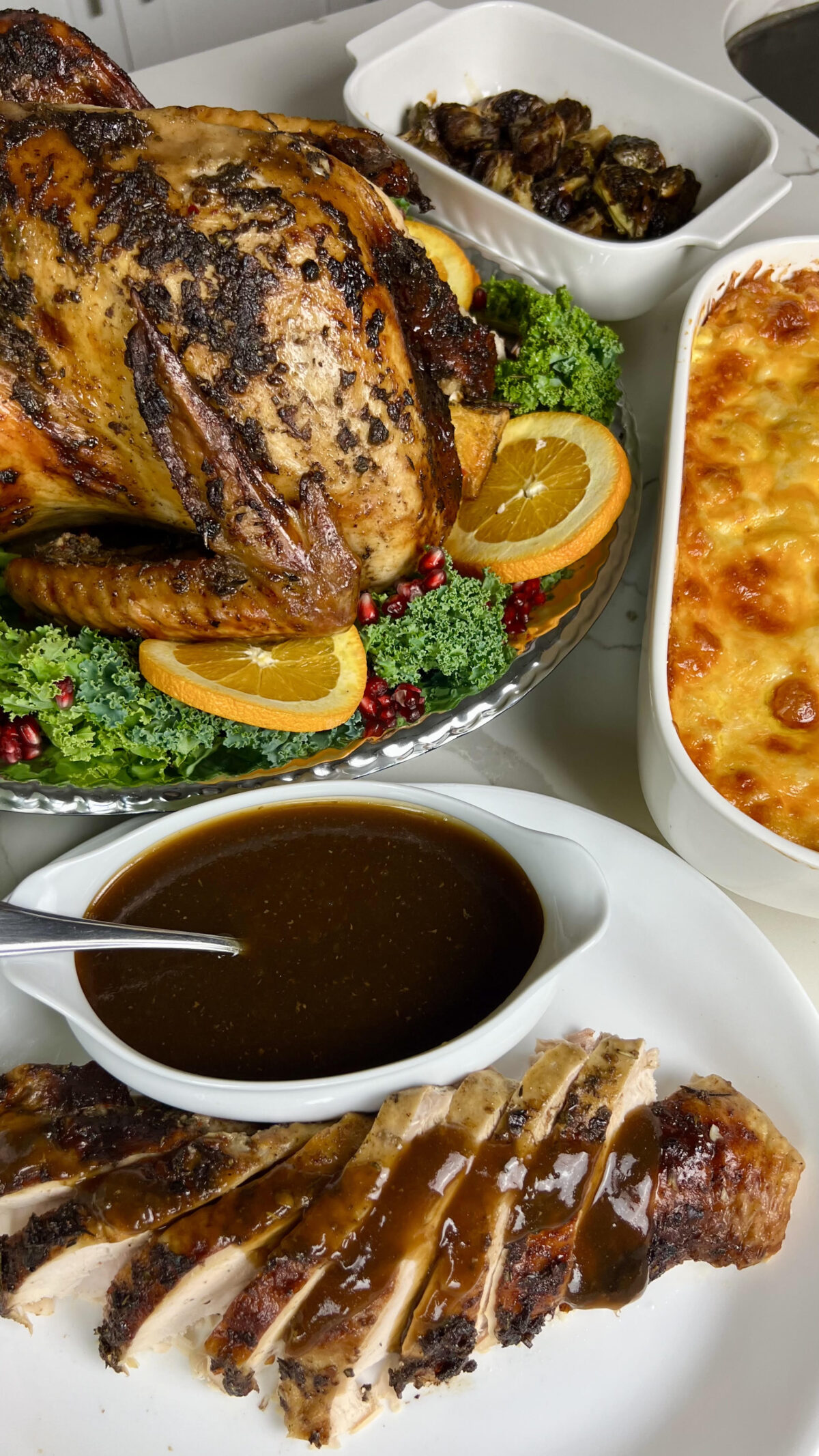
I’d serve it with Jamaican rice and peas or pumpkin rice, baked mac and cheese (roux-based or custard-based), fried plantains, vegetables (crispy brussel sprouts or coconut collard greens), and plenty of gravy made from those flavorful turkey drippings.
And if it’s Christmas, you already know the sorrel needs to be nearby.
How to Store Leftover Turkey
Remove the remaining turkey meat from the bones and transfer it to airtight containers. Refrigerate leftovers promptly and enjoy them within 3 to 4 days.
For longer storage, freeze the turkey in freezer-safe containers or bags. Adding a little of the pan juice or gravy before freezing can help keep the meat moist when reheated.
Reheat leftover turkey until hot throughout, adding a splash of broth or some gravy if needed to keep it from drying out.
I Hope You Enjoyed Making This Herb-Jerk Turkey!
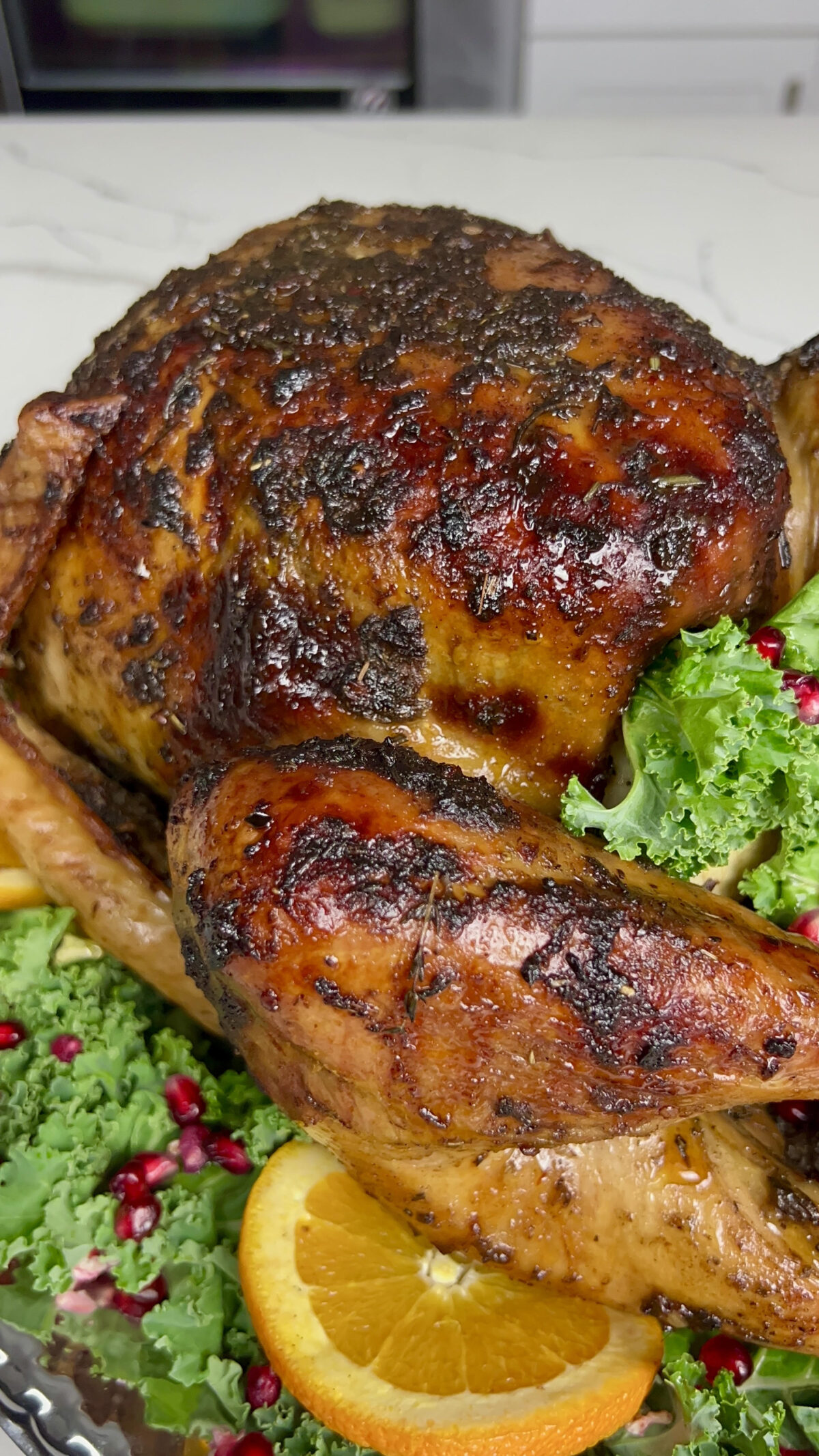
I hope you enjoyed making this Herb-Jerk Turkey as much as I do! Whether you make it for Thanksgiving, Christmas, or another special gathering, I’d love to hear how it turned out.
If you tried this recipe, please leave a comment and rating below. And don’t forget to follow me on Instagram, Facebook, YouTube, and TikTok where I share new dishes, tips, and real-time cooking in my kitchen.
Herb-Jerk Turkey Recipe
Equipment
- Large roasting pan with roasting rack
- paper towels
- Large mixing bowl
- Measuring cups and spoons
- Sharp knife
- Cutting Board
- Aluminum foil
- Basting tool (turkey baster orlarge spoon)
- Instant-read meat thermometer
- Silicone spatula or mixing spoon
- Carving knife and fork
Ingredients
For the Turkey
- 1 whole turkey, approximately 15 lbs
- 3 tbsp kosher salt
- 16 tbsp (2 sticks) unsalted butter, room temperature
- 1 tbsp fresh sage leaves, finely chopped
- 1 tbsp fresh rosemary leaves, finely chopped
- 1 tbsp fresh thyme leaves
- 4 garlic cloves, minced
- 2 tbsp Caribbean green seasoning
- 2 tbsp Jamaican jerk marinade (wet jerk seasoning), homemade or store-bought
- 1 tbsp dry Jamaican jerk seasoning
- 1 tbsp low-sodium poultry seasoning (chicken seasoning)
- 1 tsp onion powder
- 1 tsp garlic powder
- 1 tsp paprika
For the roasting Pan and Turkey Cavity
- 1 head celery, 2 whole and the remainder cut into large pieces
- 6 carrots, 2 whole and 4 cut into large pieces
- 6 garlic cloves, whole
- 3 scotch bonnet peppers, whole
- 2 onions, peeled, 1 whole and 1 sliced
- 1 orange, half quartered and half sliced
- 1 cup chicken broth
- 1 bottle Red Stripe beer
- Additional fresh sage, rosemary, and thyme
Instructions
- Dry brine the turkey. Prepare the turkey 24 hours before cooking. Remove any giblets or turkey parts from the cavity, reserving them for stock or gravy if desired. Clean the turkey, then pat it thoroughly dry with clean paper towels.Sprinkle the kosher salt evenly over the entire exterior, front and back, and inside the cavity. Refrigerate uncovered for 24 hours.
- Make the herb-jerk butter. The next day, remove the turkey from the refrigerator1 hour before you plan to cook it to allow it to come closer to room temperature. Pat dry again with clean paper towels. Add the softened butter to a bowl and mash until smooth and spreadable. Add the sage, rosemary, thyme, minced garlic, green seasoning, jerk marinade, dry jerk seasoning, poultry seasoning, garlic powder, onion powder, and paprika. Mix until thoroughly combined.
- Season and stuff the turkey. Preheat the oven to 375°F. Rub the turkey generously with the seasoned butter, coating the front, back, underneath the skin, and inside the cavity. Stuff the cavity with the whole celery stalks, whole carrots, garlic cloves, Scotch bonnet peppers, whole onion, quartered orange, and some of the additional fresh herbs.
- Prepare the roasting pan. Add the large-cut celery and carrots, sliced onion, and orange slices to a large roasting pan. Pour the chicken broth and RedStripe over the vegetables.
- Prepare for roasting. Place a roasting rack inside the prepared pan and set the turkey on the rack. Arrange additional sage, rosemary, and thyme around and inside the turkey.
- Roast the turkey. Loosely tent the turkey with aluminum foil, making sure the foil isn’t resting tightly against the skin. Roast for approximately3½ hours total, or about 12 to 15 minutes per pound. After the first hour, baste the turkey with the pan juices every 30 minutes. Alternate between roasting covered and uncovered each hour to help retain moisture while allowing the skin to brown.
- Check for doneness. Begin checking the turkey’s internal temperature as it approaches the expected cooking time. Insert an instant-read thermometer into the thickest part of the breast without touching bone. When the thermometer reads 160°F, remove the turkey from the oven.
- Rest and serve. Remove the turkey from the oven, and allow it to rest and continue to come to up to temperature. The turkey is done when the breast meat reaches 165°F. Allow it to rest for at least 30 minutes before carving and serving.
Notes
- Because the turkey is dry-brined overnight and the jerk, poultry, and green seasonings may already contain salt, use unsalted butter and low-sodium poultry seasoning to better control the overall salt level.
- Make sure the butter is fully softened before mixing in the seasonings. Cold butter will be difficult to spread underneath the turkey skin.
- Keep the Scotch bonnet peppers whole if you want their flavor without significantly increasing the heat. Avoid accidentally piercing them while handling the turkey.
- If the turkey begins browning too quickly, loosely cover it with foil and continue roasting.
- Cooking time will vary depending on the exact weight of your turkey and your oven. Always use the internal temperature rather than cooking time alone to determine doneness.
- Let the turkey rest for at least 30 minutes before carving so the juices have time to redistribute.
- You can also use this herb-jerk flavor combination on a spatchcock turkey. Because a spatchcock turkey cooks differently from a whole turkey and in about half the time, adjust the cooking time accordingly and use its internal temperature to determine doneness.
 Like this? Leave a comment below!