This post may contain affiliate links. Please see our disclosure policy.
This pork shoulder roast cooks low and slow in the oven until the meat is tender and packed with flavor. Roasted pork shoulder takes time, but the simple prep makes it an easy choice for Sunday dinner, holidays, or feeding a crowd.
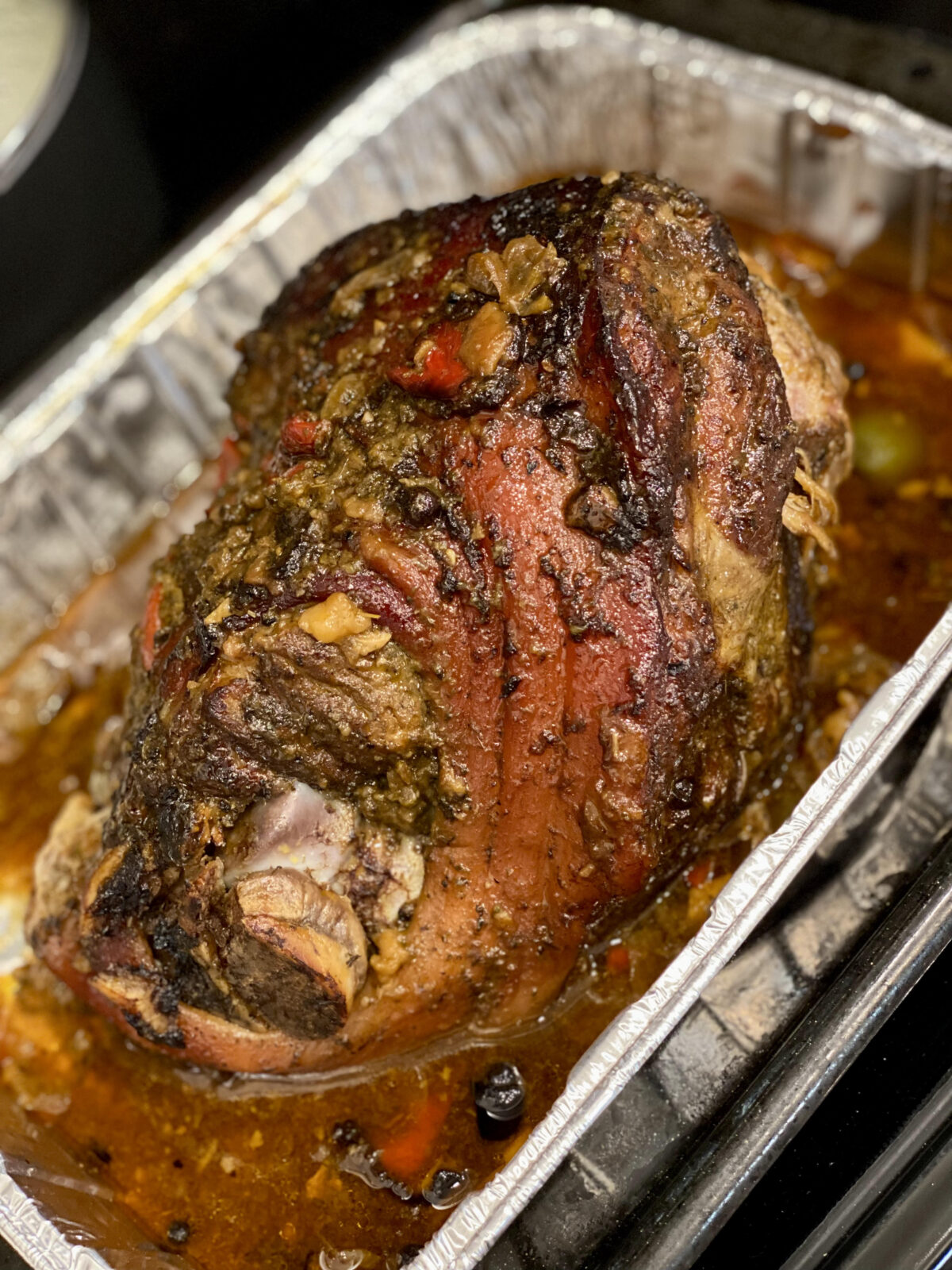
Low and Slow Pork Shoulder Roast
I’ve made pork shoulder plenty of times without measuring a thing, and it always turns out so good. For this version, I wanted to finally write it down and share exactly how I make it. My process starts with green seasoning and jerk marinade for plenty of flavor. After hours in the oven, the meat is so tender it practically melts in your mouth.
Why You’ll Love This Recipe
- Full of flavor: I let the pork marinate with my homemade seasonings, mojo, herbs, and spices. Marinating overnight gives the seasoning plenty of time to soak in.
- Slow-roasted: Cooking the shoulder low and slow gives the fat and connective tissue time to break down. It leaves the pork juicy and easy to pull apart.
- Feeds a crowd: A 6- to 8-pound pork shoulder is perfect for big family dinners, Thanksgiving, Christmas, or any time I’m cooking for a full house.
Which is the best cooking method for a pork shoulder?
For pork shoulder, slow roasting in the oven is one of the best methods because the cut needs time to soften. The lower heat helps the fat render and the connective tissue break down without drying out the meat. Starting at a higher temperature also helps the outside begin to brown before the pork finishes cooking low and slow.
Ingredients
- Pork shoulder: I use a 6 to 8-pound pork shoulder because it has enough fat to stay rich and moist during the long roasting time.
- Caribbean green seasoning: My homemade green seasoning builds the first layer of flavor with fresh herbs, aromatics, and peppers. I rub it all over the pork and underneath the skin.
- Jamaican jerk marinade: My jerk marinade adds that unmistakable Jamaican flavor with herbs, spices, and a little heat. A small amount goes a long way alongside the other seasonings.
- Mojo marinade: Mojo adds a bright, garlicky citrus flavor that balances the richness of the pork. It also adds another layer of seasoning while the shoulder marinates.
- Dry seasonings: Jamaican meat seasoning, seasoned salt, black pepper, adobo, and paprika give the outside of the pork plenty of savory flavor. I mix them together before rubbing them all over the roast.
- Dark brown sugar: A little brown sugar balances the savory seasonings and helps the outside of the pork develop deeper color as it roasts.
- Garlic cloves: I stuff whole garlic cloves directly into the pork so that garlicky flavor works its way into the meat as it cooks.
- Whole cloves: These add a warm, slightly sweet spice that pairs well with the other Caribbean seasonings. I tuck one into each of the same openings as the garlic.
- Onion and bell peppers: I add roughly chopped onion and red and green bell peppers for extra savory flavor and a little natural sweetness as the pork marinates and roasts.
- Pimento and thyme: Whole pimento berries and fresh thyme add warm, earthy flavor that works especially well with the green seasoning and jerk marinade.
How To Cook a Pork Shoulder Roast
Prepare and Season the Pork
I rinse the pork shoulder with lime, vinegar, and water, then pat it dry well. Next, I make 12 small piercings all around the pork with a knife. Unlike some pork shoulder roast recipes that season only the surface, these openings let me tuck garlic and whole cloves right into the meat.
I rub the green seasoning, jerk marinade, and mojo marinade all over the pork, including underneath the skin. Then I combine the Jamaican meat seasoning, seasoned salt, black pepper, adobo, paprika, and brown sugar. I rub that mixture over the entire shoulder before stuffing each piercing with one garlic clove and one whole clove.
Marinate the Pork Shoulder
I scatter the onion, bell peppers, pimento berries, and thyme over the seasoned pork. Then I cover it and let it marinate for a few hours. Overnight is even better when I have the time because it gives all those seasonings more time to work into the meat.
Slow Cooking Roast Pork Shoulder
I preheat the oven to 400°F and transfer the pork to an oven-safe baking bag. I place the bag in a roasting pan and follow the package directions for venting. The pork roasts at 400°F for 30 minutes before I lower the heat to 325°F.
I let it continue roasting at 325°F for another 3½ hours. That slower stretch of cooking gives the shoulder plenty of time to soften while the seasonings and pan juices develop even more flavor.
Crisp the Skin and Rest
For crispier skin, I remove the pork and its juices from the baking bag during the final 30 minutes. I return everything to the roasting pan, raise the oven to 400°F, and finish it uncovered. Once the pork has cooked for about four hours total, I let it rest for 15 minutes before carving.
Storage
Store leftover pork shoulder in an airtight container with some of the pan juices and refrigerate it for up to 4 days. To reheat, cover the pork and warm it in a 325°F oven until heated through, adding a little of the reserved juice to keep it from drying out.
For longer storage, freeze the pork with some of its juices in a freezer-safe container for up to 3 months.
Tips for the Best Pork Shoulder Roast
- Marinate overnight. Giving the pork several hours to sit in the seasonings helps all those layers of flavor work into the meat before roasting.
- Season under the skin. Gently pull the skin back so you can rub the green seasoning and marinades directly onto the pork instead of seasoning only the surface.
- Use the baking bag correctly. Check the package directions before roasting, since some bags need small vents to release steam safely while the pork cooks.
- Let it rest. Give the pork at least 15 minutes after it comes out of the oven so the juices can settle before you start carving.
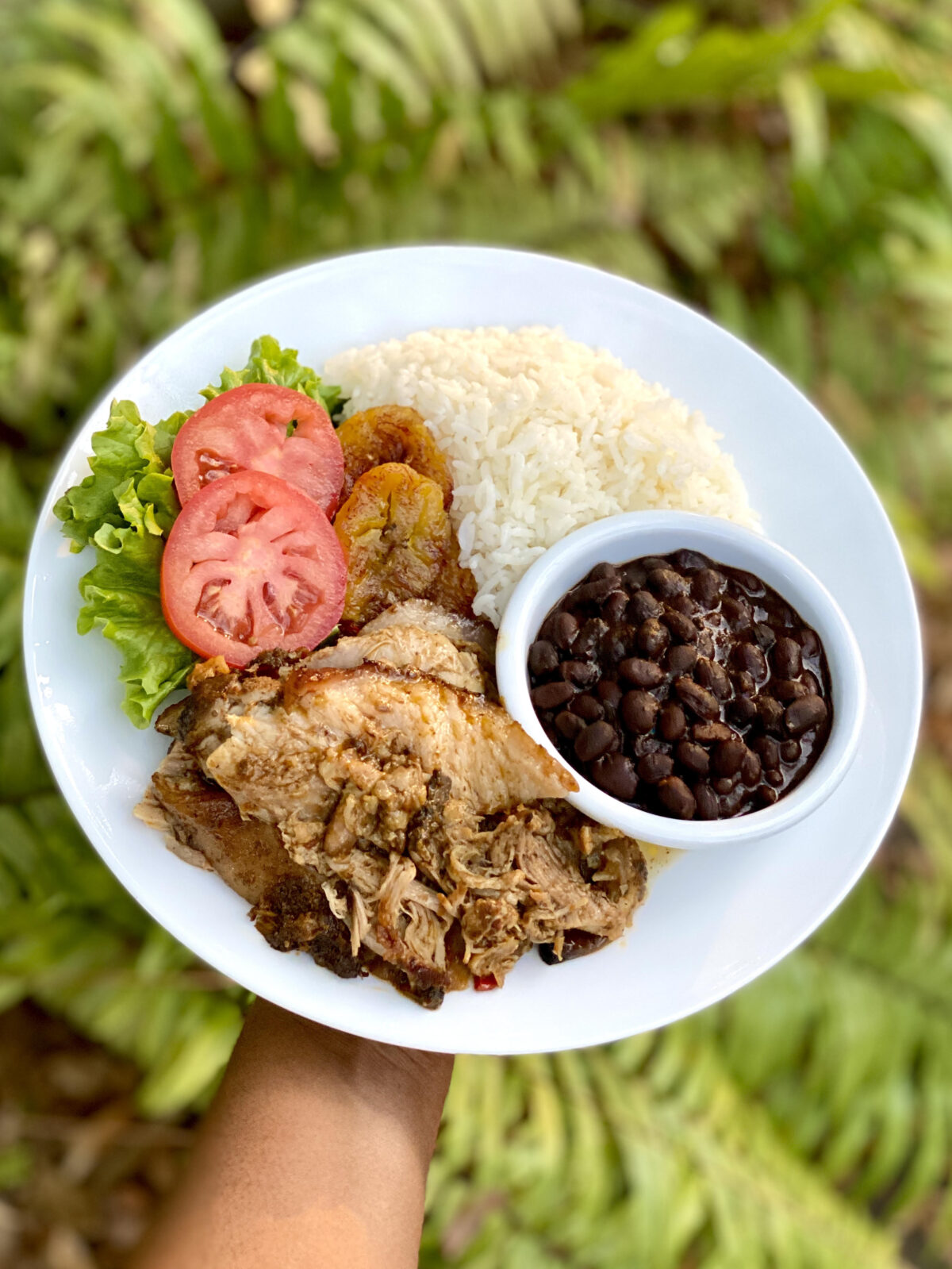
What to Serve with Pork Shoulder Roast
- White rice
- Rice and peas
- Fried plantain
- Salad
- Steamed cabbage
- Carrot juice
Frequently Asked Questions
Cooking time depends on the size of the pork shoulder and the oven temperature. For this 6 to 8-pound roast, plan on about 4 hours in the oven, followed by a 15-minute rest.
Pork roasts should reach a minimum internal temperature of 145°F, followed by at least a 3-minute rest. Pork shoulder is often cooked to a higher temperature when you want it especially soft or easy to shred.
Yes, pork shoulder is an excellent cut for pulled pork because its fat and connective tissue soften during a long cook. For meat that shreds easily, cook it beyond the minimum safe temperature until it reaches a pull-apart texture.
I Hope You Enjoy This Recipe!
If you try it, let me know how it turns out. I’d love to hear from you.
For more Jamaican-inspired home cooking, follow me on Instagram, Facebook, YouTube, and TikTok where I share new dishes, tips, and real-time cooking in my kitchen.
Pork Shoulder Roast Recipe
Ingredients
- 6-8 lb pork shoulder
- ½ cup Caribbean green seasoning
- ¼ cup jerk marinade
- ¼ cup mojo marinade
- 1 tbsp Jamaican meat seasoning
- 2 tsp seasoned salt
- 1 tsp black pepper
- 1 tsp adobo seasoning
- 1 tsp paprika
- 1 tsp dark brown sugar
- 12 whole garlic cloves
- 12 cloves
- 1 yellow onion, roughly chopped
- ¼ green bell pepper, roughly chopped
- ¼ red bell pepper, roughly chopped
- 1 tsp pimento seeds/allspice berries
- 4 thyme sprigs
Instructions
- Rinse the pork shoulder with lime, vinegar, and water, then pat it dry with paper towel. Use a knife to make 12 one-inch piercings all around pork shoulder.
- Rub the green seasoning, jerk marinade, and mojo marinade all over the pork shoulder. Partially pull back the skin to get seasoning under there also. In a bowl, mix together the Jamaican meat seasoning, seasoned salt, black pepper, adobo seasoning, paprika, and dark brown sugar. Season the pork all over with the seasoning mixture. Stuff the piercings with one garlic clove and one clove each.
- Add the roughly chopped onion, bell peppers, pimento seeds, and thyme sprigs over the pork shoulder. Marinate for a few hours or overnight for best results.
- Preheat the oven to 400 degrees Fahrenheit. Transfer the seasoned pork shoulder to an oven-safe baking bag. Follow package instructions for the baking bag, as some require a few piercings to be made in the bag to vent.
- Place the baking bag with the pork shoulder on a roasting pan. Roast at 400 degrees for 30 minutes.
- Reduce the heat to 325 degrees and roast for another 3.5 hours.
- Optional: For the last 30 minutes, remove the roast with its juices from the baking bag, turn the heat up to 400, place the roast back into the roasting pan, and bake uncovered for the remaining 30 minutes for crispier skin.
- After 4 hours of total oven time, the pork roast is ready. Let it rest for 15 minutes before carving/cutting as desired for serving.
- Serve with white rice or rice & peas, fried plantains, and salad.
 Like this? Leave a comment below!