This post may contain affiliate links. Please see our disclosure policy.
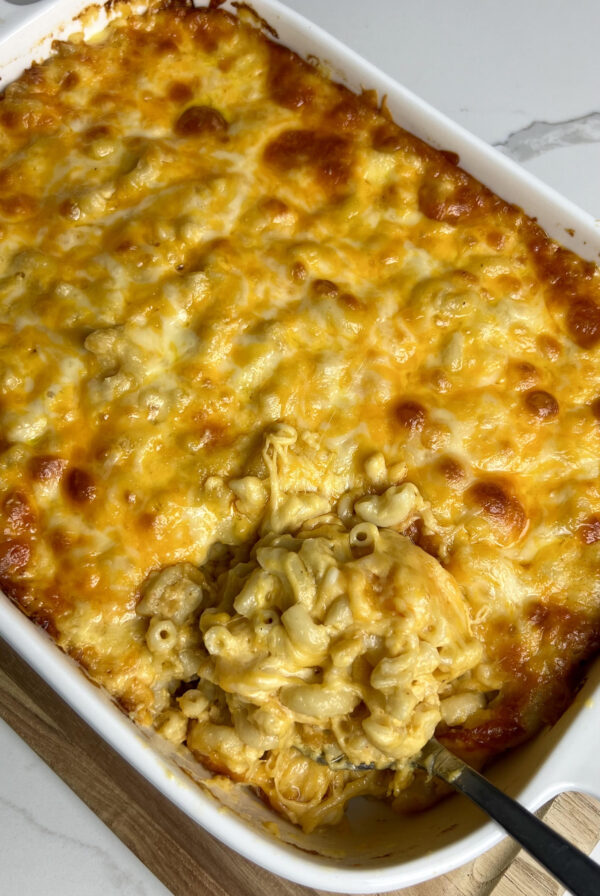
If you like your baked mac & cheese creamy and cheesy but with enough structure to hold together when you scoop it onto your plate, you’ll love this custard-based version. Plus, it takes less time to make than roux-based mac & cheese!
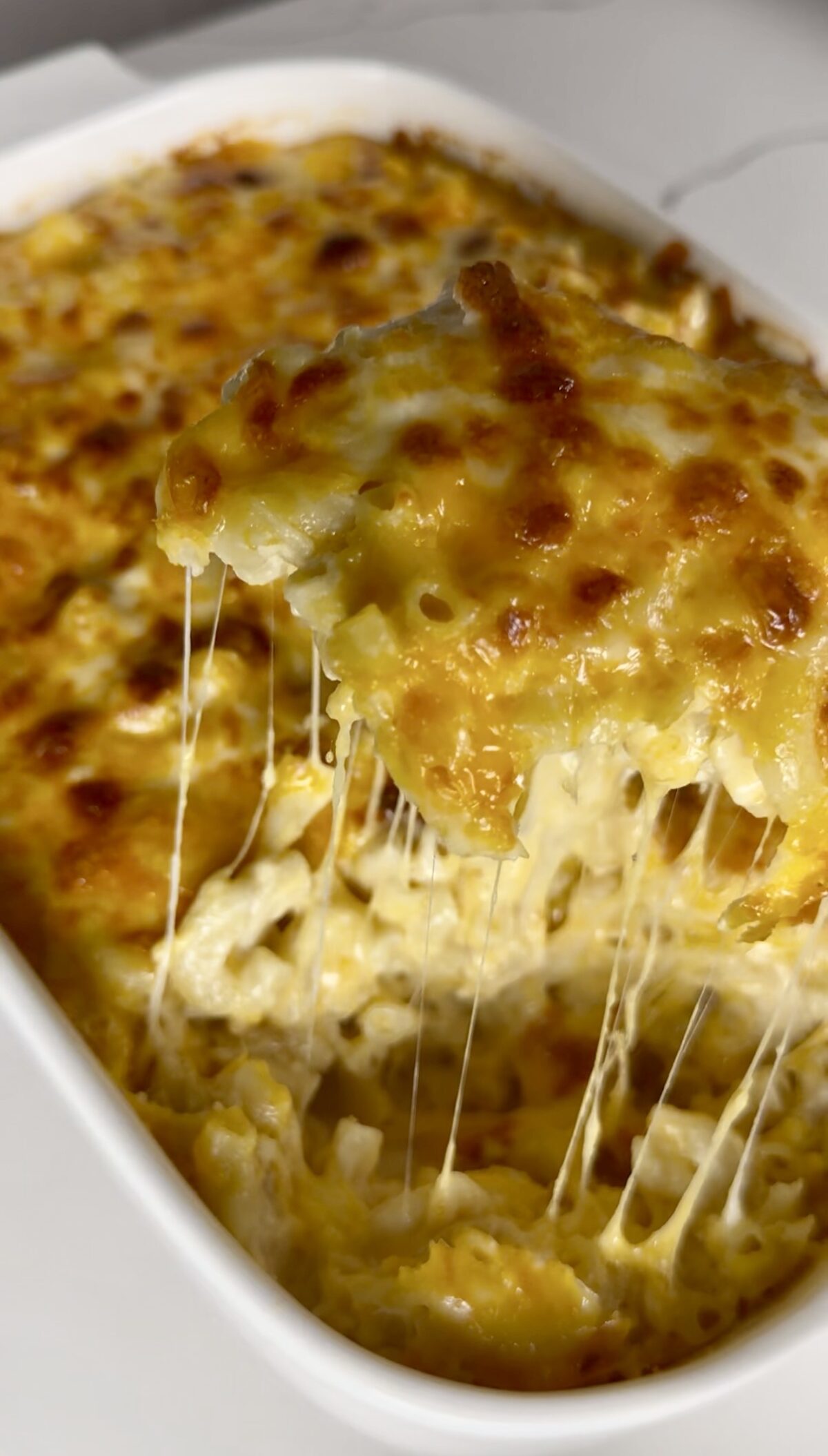
Instead of making a cheese sauce with flour, this recipe uses eggs, evaporated milk, and heavy cream to create a simple custard that brings everything together as it bakes. The macaroni is combined with butter, sour cream, and plenty of mild cheddar, medium cheddar, mozzarella, and Colby Jack, then layered with even more cheese before going into the oven.
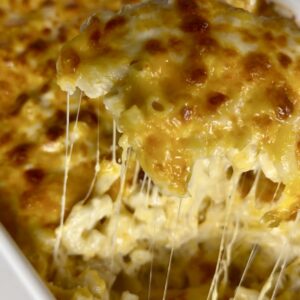
I especially love that there’s no cheese sauce to prepare separately on the stove for this method. The ingredients get added directly to the hot macaroni in a specific order so the cheeses begin to melt, everything incorporates smoothly, and the eggs don’t curdle when the custard is added. Once baked, you have a pan of mac and cheese that’s moist and creamy inside, with plenty of melted cheese throughout and that bubbly, golden layer of cheese on top.
Roux-Based vs. Custard-Based Mac & Cheese
The biggest difference between my two baked mac and cheese recipes is what brings all that cheesy goodness together.
My roux-based mac and cheese starts by cooking butter and flour together before gradually incorporating evaporated milk, heavy cream, and cheese to create a creamy sauce. That sauce coats the macaroni before it’s layered with more cheese and baked.
This custard-based version replaces the roux with eggs, evaporated milk, and heavy cream. Instead of preparing a separate cheese sauce on the stovetop, butter, sour cream, and shredded cheese mix directly into the hot macaroni. The custard is then gradually incorporated before baking.
There’s also an important difference in technique. With a roux-based recipe, controlling the heat while making the cheese sauce helps keep it smooth and prevents it from breaking. With a custard-based recipe, the order in which you add the ingredients matters. Adding the butter, sour cream, and cheese to the macaroni first gives the pasta a chance to cool slightly before the egg mixture is gradually incorporated, reducing the risk of curdling the eggs.
Neither method is necessarily better than the other. They’re simply two different ways to make a great pan of baked mac and cheese — and now you can decide which texture you prefer!
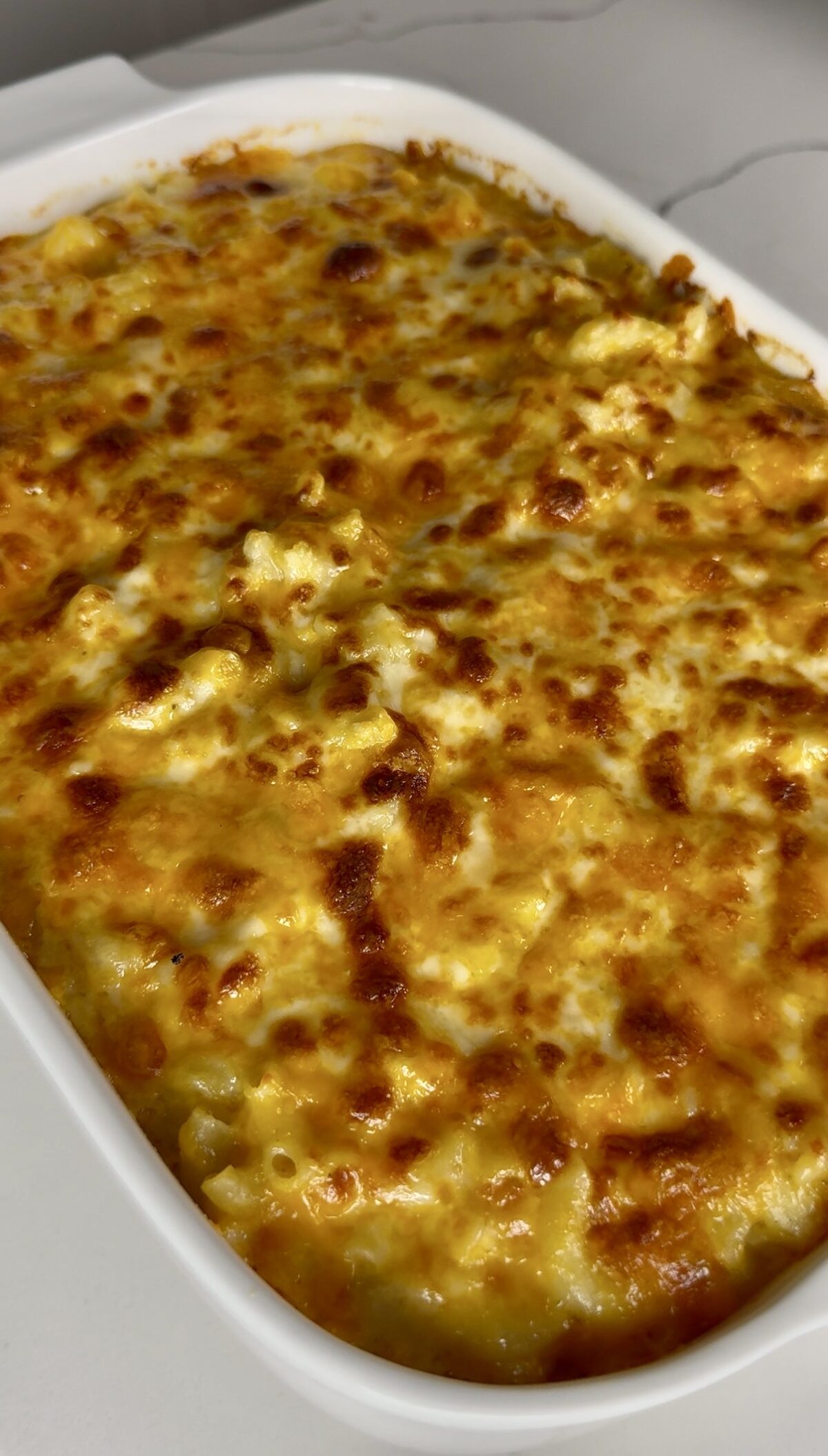
Ingredients for custard-based mac & cheese
- Elbow macaroni: The classic pasta shape for baked mac and cheese. Cook it only until al dente since the noodles will continue to soften in the oven.
- Mild and medium cheddar: Using both gives the mac and cheese plenty of familiar cheddar flavor while adding a little extra depth without making the blend too sharp.
- Mozzarella: Adds creaminess, melt, and that satisfying cheese pull.
- Colby Jack: Melts beautifully and rounds out the cheese blend with a mild, creamy flavor.
- Butter: Melts into the hot macaroni and adds richness before you incorporate the remaining ingredients.
- Sour cream: Adds another layer of creaminess along with a subtle tang.
- Eggs: The key ingredient that distinguishes this version from my roux-based recipe. The eggs combine with the dairy to create the custard that helps the mac and cheese set as it bakes.
- Evaporated milk: Forms the base of the custard along with the eggs and heavy cream, adding richness without making the mixture too heavy.
- Heavy cream: Adds extra richness and creaminess to the custard. You can also add a few additional tablespoons if needed to get the consistency you prefer before baking.Seasonings: Onion powder, garlic powder, paprika, salt, white pepper, and mustard powder enhance the cheeses without competing with their flavor.
Tips for the Best baked Mac & Cheese
These are the same rules I follow whether I’m making my custard-based mac and cheese or my roux-based version.
1. Shred your own cheese.
Pre-shredded cheeses typically contain anti-caking agents that can interfere with how smoothly they melt. Grating your cheese at home takes a little more time, but it’s worth it for the texture.
2. Don’t overcook the noodles.
Cook your macaroni only until al dente. The pasta will continue to cook in the oven, and starting with overly soft noodles can leave you with mushy mac and cheese.
3. Don’t overdo the seasonings.
Mac and cheese should taste like cheese! The seasoning blend is meant to enhance the flavor of the cheeses, not overpower them.
4. follow the order of ingredients to control the Temperature.
With this custard-based version, I add the butter, sour cream, and cheese to the hot macaroni first, followed by the seasonings. I gradually mix in the egg custard last. This order gives the macaroni time to cool slightly before I add the eggs, helping everything incorporate smoothly without curdling. For my roux-based version, temperature control is just as important: I melt the cheese over very low heat to prevent the sauce from breaking.
5. Don’t overbake it.
The pasta is already cooked before it goes into the oven, so you only need to bake the mac and cheese until the custard has set and the cheese is bubbly and golden. Leaving it in the oven too long can make the noodles too soft and dry out the mac and cheese.
6. Let it rest before serving.
Give the mac and cheese about 15 minutes to rest after it comes out of the oven. This is especially helpful with a custard-based version because it gives everything a chance to finish setting so that it holds together better when served. But don’t wait too long — you still want to serve it hot before the cheese becomes too stiff.
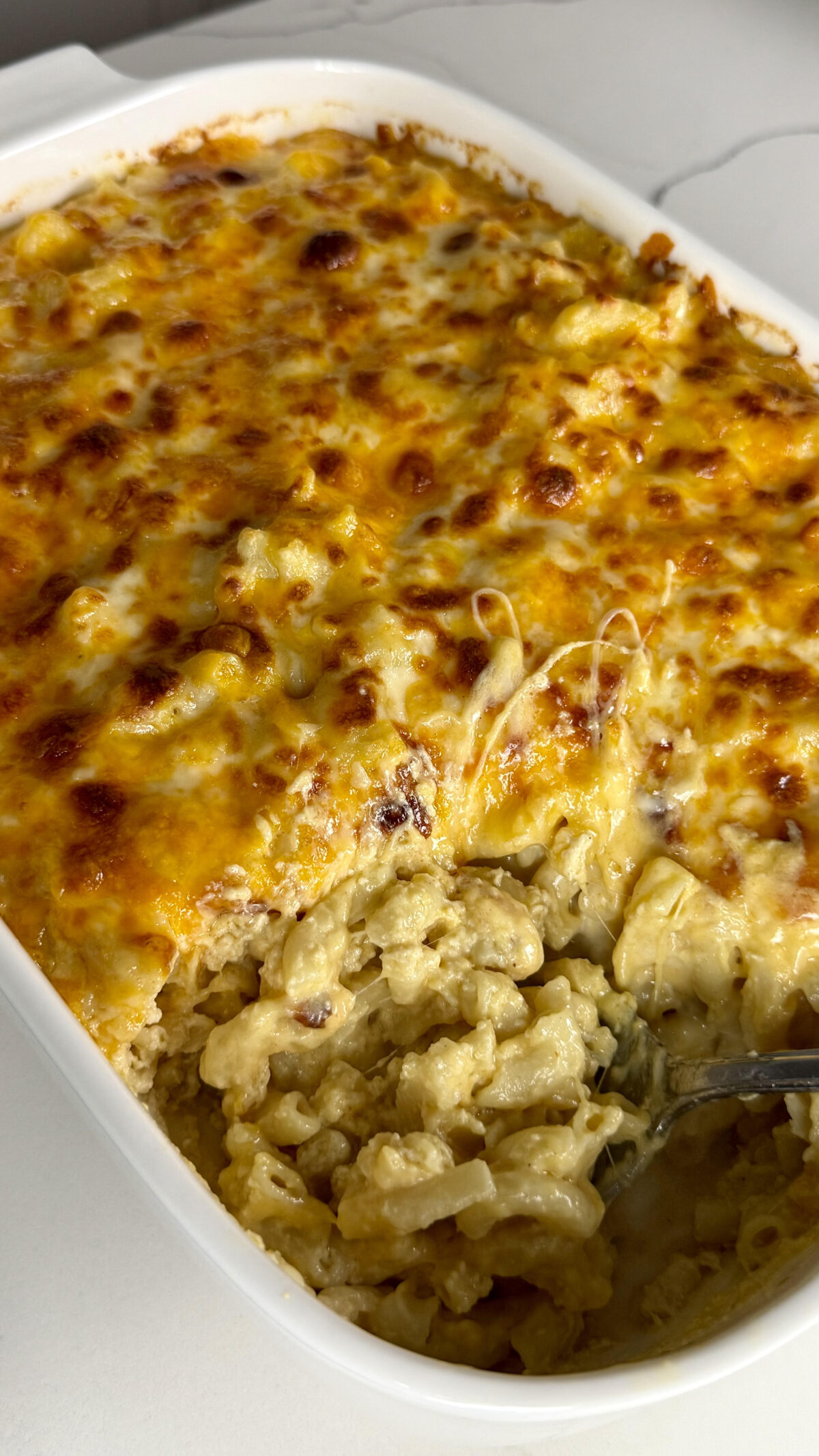
I Hope You Enjoyed This Version of Baked Mac & Cheese
If you prefer baked mac and cheese with a little more structure while still being creamy and cheesy, this custard-based version might be the one for you. And, it takes less time! It’s a great option for Thanksgiving, Christmas, Sunday dinner, cookouts, or any occasion that calls for a pan of homemade mac and cheese.
And remember, the small details matter: freshly shredded cheese, al dente pasta, simple seasonings, the right order of ingredients, and careful baking can make all the difference.
If you try this recipe, let me know how it turns out. I’d love to hear from you!
Follow me on Instagram, Facebook, YouTube, and TikTok where I share new dishes, tips, and real-time cooking in my kitchen.
Baked Mac and Cheese (Custard-Based)
Equipment
- large pot
- Colander
- Large mixing bowl
- Medium mixing bowl
- whisk
- Wooden spoon or silicone spatula
- Box grater
- 9 x 13-inch casserole dish
Ingredients
- 16 oz elbow macaroni
- 6 tbsp salted butter
- 8 oz mild cheddar cheese, freshly grated
- 8 oz medium cheddar cheese, freshly grated
- 8 oz Colby Jack cheese, freshly grated
- 1 1/2 cups evaporated milk
- 1/2 cup heavy cream, plus more as needed
- 2 large eggs
- 1/2 tsp onion powder
- 1/2 tsp garlic powder
- 1/2 tsp paprika
- 1/2 tsp salt, or to taste
- 1/2 tsp white pepper
- 1/2 tsp mustard powder
Instructions
- Cook the elbow macaroni in heavily salted water according to the package instructions until al dente. The noodles will continue to soften as the mac and cheese bakes. Drain well.
- Preheat the oven to 350°F. While the macaroni is still hot, add the salted butter, sour cream, and about half of the combined mild cheddar, medium cheddar, Colby Jack, and mozzarella. Mix well until the butter and cheese begin to melt and everything is evenly incorporated.
- Add the onion powder, garlic powder, paprika, salt, white pepper, and mustard powder. Mix well again.
- In a separate bowl, whisk together the eggs, evaporated milk, and ½ cup of heavy cream to make the custard.
- Gradually pour the custard into the macaroni and cheese, mixing between additions, until you reach a thick but creamy consistency that is moist without being too soupy. You may have a few tablespoons of custard remaining, and that’s OK. Alternatively, if you prefer a creamier consistency and need more liquid, gradually add a few additional tablespoons of heavy cream until it looks right to you.
- Add about one-third of the mac and cheese to a 9x 13-inch casserole dish, spreading it evenly across the bottom. Sprinkle about one-third of the remaining shredded cheese over the first layer. Repeat the layering process two more times, finishing with the remaining cheese on top.
- Bake uncovered at 350°F for approximately 35 minutes, or until the custard is set and the mac and cheese is bubbly and golden to your liking. For a little more color and a slight crust on top, switch the oven to low broil for the final 3 to 5 minutes, watching closely to prevent burning.
- Remove the mac and cheese from the oven, and allow it to rest for at least 10 minutes before serving.
Notes
- Grate your cheese at home rather than using pre-shredded cheese for the best melt and texture.
- Cook the macaroni only until al dente because it will continue to soften while baking.
- Add the butter, sour cream, and cheese to the hot macaroni before adding the egg custard. This gives the macaroni time to cool slightly and helps prevent the eggs from curdling.
- Add the custard gradually. You want the mac and cheese to be moist and creamy, but not soupy. You do not have to use every drop of custard.
- If you want additional creaminess after adding the custard, mix in heavy cream a few tablespoons at a time until you reach your desired consistency.
- Avoid overbaking. The custard should be set, but the mac and cheese should still be moist.
- Let the mac and cheese rest for about 15 minutes before serving so the custard can finish setting while the dish remains hot and creamy.
 Like this? Leave a comment below!